
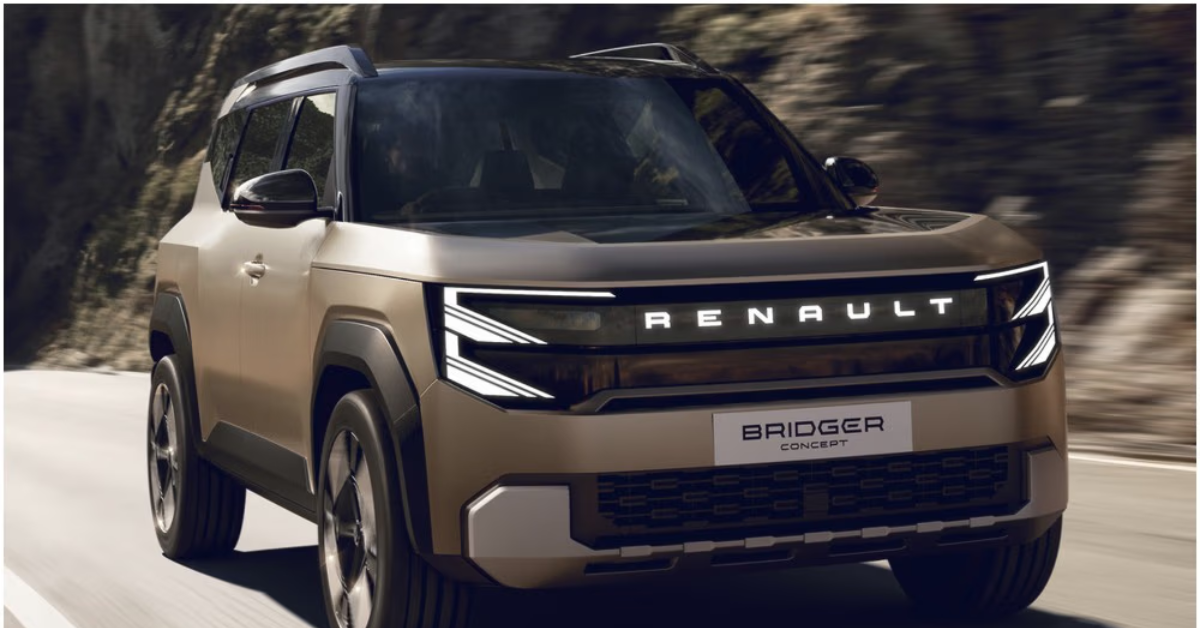
Renault is preparing one of its most ambitious product launches in India with the upcoming Renault Bridger SUV. What makes this model truly stand out is its multi-powertrain strategy—offering a turbo-petrol engine, a hybrid system, and a fully electric (EV) version under a single model lineup.
In a market where most vehicles are limited to one or two powertrain options, the Bridger’s approach signals a major shift. It is not just about launching a new SUV, but about creating a flexible, future-ready platform that caters to a wide range of buyers.
Let’s take a deep dive into what the Renault Bridger SUV is expected to offer and why it could become a game-changer in the Indian automotive market.
A New Strategy for a Changing Market
The Indian automotive landscape is evolving rapidly. Buyers today are not only looking for performance and features but also considering fuel efficiency, environmental impact, and long-term running costs.
Renault’s decision to offer three different powertrains in the Bridger is a direct response to these changing preferences.
This strategy allows the brand to:
- Target traditional petrol buyers
- Attract hybrid-conscious customers
- Appeal to early adopters of electric vehicles
By doing so, Renault is effectively covering multiple segments with a single model.
1.2-Litre Turbo-Petrol Engine: Balanced Performance
The base powertrain for the Renault Bridger is expected to be a 1.2-litre turbocharged petrol engine.
Expected Highlights:
- 3-cylinder turbo petrol setup
- Power output around 110–120 hp
- Strong torque for city and highway driving
- Manual and automatic transmission options
This engine will likely be the most accessible variant in terms of pricing and will cater to buyers who prefer conventional petrol vehicles.
Driving Experience:
- Smooth acceleration
- Responsive performance
- Suitable for daily commuting
The turbocharged setup ensures that the engine delivers both efficiency and performance, making it ideal for Indian driving conditions.
Hybrid Powertrain: The Middle Ground
The hybrid version of the Renault Bridger is expected to bridge the gap between petrol and electric.
What to Expect:
- Petrol engine combined with an electric motor
- Improved fuel efficiency
- Reduced emissions
- Smooth and quiet driving experience
Hybrid vehicles are becoming increasingly popular because they offer better mileage without the need for charging infrastructure.
Key Advantages:
- Lower fuel consumption compared to petrol
- No range anxiety like EVs
- Ideal for long-distance travel
This variant could appeal to buyers who want to transition toward greener mobility without fully committing to electric vehicles.
Electric Version (EV): The Future of Mobility
The most exciting aspect of the Renault Bridger lineup is its fully electric version.
Expected Specifications:
- Battery pack around 40–50 kWh
- Claimed range up to 400–500 km
- Fast-charging capability
- Instant torque for quick acceleration
Why It Matters:
- Zero emissions
- Lower running costs
- Government incentives (depending on policies)
The EV version positions the Bridger as a future-ready SUV, aligning with the global shift toward electric mobility.
Multi-Energy Platform: The Core Strength
The Renault Bridger is expected to be built on a flexible platform that supports multiple powertrains.
Benefits of This Platform:
- Cost efficiency in production
- Faster adaptation to market trends
- Consistent design across variants
This approach allows Renault to offer petrol, hybrid, and electric versions without compromising on design or quality.
Design & Styling Expectations
Renault is likely to introduce a bold and modern design for the Bridger SUV.
Expected Features:
- Aggressive front grille
- Sharp LED headlamps
- Muscular body lines
- Sporty stance
The design will likely appeal to younger buyers looking for a stylish and dynamic SUV.
Interior & Features
The Renault Bridger is expected to offer a feature-rich cabin with a focus on comfort and technology.
Possible Features:
- Large touchscreen infotainment system
- Wireless Android Auto and Apple CarPlay
- Digital instrument cluster
- Automatic climate control
- Connected car technology
Higher variants may also include:
- Premium upholstery
- Ambient lighting
- Advanced driver assistance systems
Performance Comparison Across Powertrains
Each powertrain option offers a unique driving experience:
Turbo Petrol
- Best for affordability and simplicity
- Good performance for daily use
Hybrid
- Balanced performance and efficiency
- Ideal for long drives
Electric
- Instant acceleration
- Silent driving experience
- Lowest running cost
This variety ensures that buyers can choose a version that best suits their needs.
Expected Pricing Strategy
Pricing will play a crucial role in the success of the Renault Bridger.
Estimated Price Range:
- Turbo petrol: ₹8–12 lakh
- Hybrid: ₹12–15 lakh
- Electric: ₹14–18 lakh
This tiered pricing strategy allows Renault to target a wide audience.
Competition in the Segment
The Renault Bridger will compete with several popular SUVs in India.
Petrol & Hybrid Rivals:
- Tata Nexon
- Hyundai Venue
- Maruti Brezza
Electric Rivals:
- Tata Nexon EV
- Mahindra XUV400
By offering multiple powertrains, the Bridger can compete across different categories simultaneously.
Pros and Cons (Expected)
Pros
- Multiple powertrain options
- Future-ready technology
- Wide price range
- Strong performance potential
Cons
- Complex lineup may confuse buyers
- Strong competition
- EV infrastructure challenges
- Brand perception needs improvement
Final Verdict
The Renault Bridger SUV is shaping up to be one of the most versatile vehicles in its segment. By offering turbo petrol, hybrid, and electric options, Renault is giving buyers unmatched flexibility.
This approach not only increases its appeal but also positions it as a forward-thinking product in a rapidly evolving market.
Conclusion
The Renault Bridger represents a bold and innovative step for the brand. It acknowledges the diversity of buyer preferences and provides solutions for each one.
Whether you are a traditional petrol user, a hybrid enthusiast, or an EV adopter, the Bridger aims to have something for everyone.
If Renault executes this strategy effectively, the Bridger could become a major success and redefine how SUVs are offered in India.