
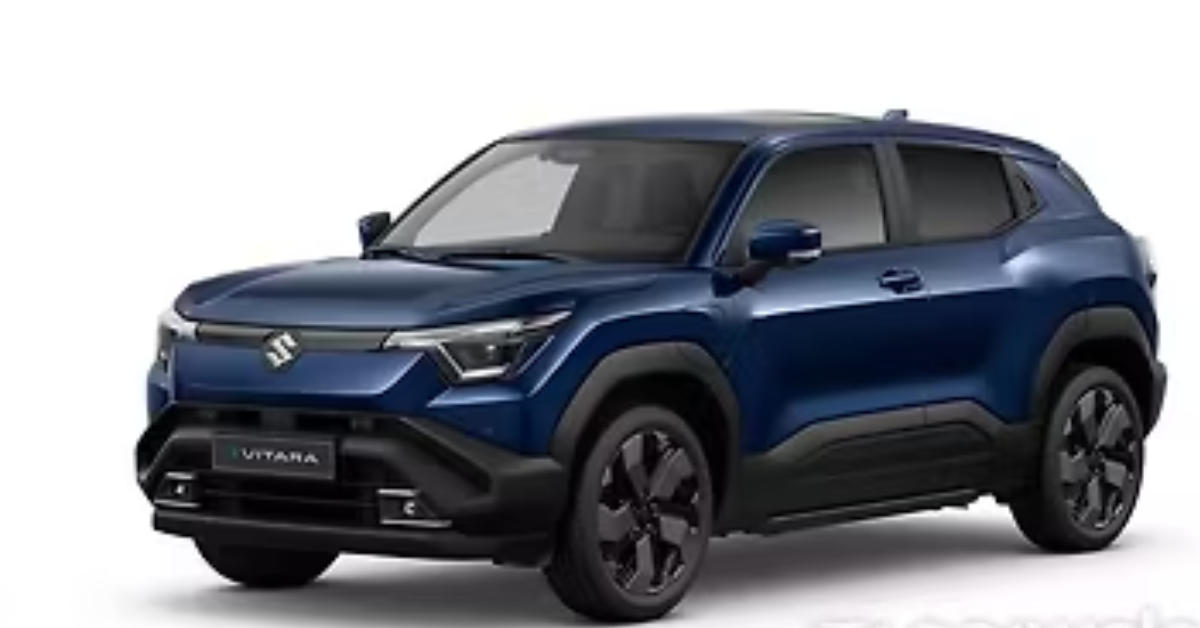
Maruti Suzuki’s much-talked-about e Vitara has already been one of the most closely watched upcoming electric SUVs in the Indian market, and now it has hit another major milestone—its first price hike. In the fast-moving EV segment, even a small change in pricing can trigger a lot of discussion because buyers are not just looking at the ex-showroom figure. They are also comparing battery options, claimed range, charging convenience, long-term running cost, brand trust and resale expectations. That is why the first price increase on the e Vitara matters much more than it may appear at first glance.
The e Vitara is an important product for Maruti Suzuki because it represents the company’s serious entry into the mainstream electric SUV space. It is expected to carry the trust of the Maruti badge while also introducing buyers to a new phase of the brand—one focused on EV technology, connected features, premium interiors and modern SUV design. With that kind of importance attached to the product, any change in pricing instantly becomes big news.
But the real question is not just “How much has the price gone up?” The bigger question is whether the e Vitara still makes sense after the first price hike. Will it continue to attract value-conscious buyers? Will the increase affect its competitive position against rival electric SUVs? And what does this price revision tell us about Maruti Suzuki’s EV strategy going forward?
Let’s break down everything in detail.
Why the First Price Hike Is a Big Development for the e Vitara
The first price hike of any new vehicle is always closely watched, but in the case of the e Vitara, it carries extra weight. This SUV is not just another model in Maruti Suzuki’s portfolio—it is a flagship statement in the brand’s electric journey. Buyers who were waiting for Maruti’s first mainstream EV have been tracking every update around it, from design and battery details to launch strategy and expected pricing.
A price hike at this stage immediately affects buyer psychology in two ways. First, it changes the perception of value. Many customers enter the EV market with a fixed budget in mind, and even a modest upward revision can push a model closer to more feature-rich or more premium alternatives. Second, it creates urgency. Once a model gets its first price increase, many buyers begin to assume that more revisions could follow later as demand, input costs and market positioning evolve.
For Maruti Suzuki, the e Vitara is expected to play a crucial role in shaping how Indian customers view the brand’s electric future. So the first price hike is not just about numbers—it is about how the market interprets the product’s positioning.
What the Price Hike Could Mean in Practical Terms
When an EV gets a price increase, the immediate reaction is often disappointment. But the effect of that hike depends on several things:
- How large the increase is
- Which variants are affected
- Whether the feature list remains unchanged
- Whether demand remains strong despite the revision
- How the updated price compares with rivals
If the hike is relatively small and the e Vitara still remains competitively placed, then the impact may be limited. But if the increase pushes it too close to better-equipped or longer-range alternatives, then buyers may begin to reconsider their options.
The practical impact of the price hike can also differ depending on the type of buyer:
1. Early EV Buyers
People who were already planning to buy the e Vitara may still move ahead if they trust the Maruti brand, like the design and feel comfortable with the ownership ecosystem.
2. Budget-Sensitive Buyers
These are the buyers most affected by any upward price movement. If the e Vitara was already stretching their budget, even a small hike can change the buying decision.
3. Feature-Focused Buyers
If the revised price starts overlapping with rivals that offer more premium interiors, larger batteries or more technology, these buyers may compare more aggressively before deciding.
Why Maruti Suzuki’s Pricing Strategy Matters More Than Ever
The e Vitara is entering a market where buyers have become far more informed. Electric SUV customers are not just buying on brand name anymore. They are comparing range per rupee, charging speed, battery warranty, safety kit, software features, cabin quality and ownership cost.
This means Maruti Suzuki cannot rely only on its strong dealership network and mass-market trust. The e Vitara has to justify its price as a complete package. A first price hike raises the pressure even more because now buyers will evaluate whether the SUV still delivers enough value after the revision.
Maruti’s advantage, of course, is its reputation for wide service reach, potentially lower maintenance anxiety and strong familiarity among Indian car buyers. But in the EV space, those strengths need to be supported by a convincing product.
The e Vitara’s Role in Maruti Suzuki’s EV Journey
To understand the importance of this price hike, it helps to look at the bigger picture. The e Vitara is not just a product launch—it is a strategic turning point. Maruti Suzuki has dominated the Indian small-car market for years, but the EV transition has created a fresh competitive landscape. New-age electric brands and established rivals have already built momentum in this segment, so Maruti’s first major EV has to make a strong impression.
That is why the e Vitara is expected to do multiple jobs at once:
- Introduce Maruti buyers to the company’s EV ecosystem
- Establish the brand in the premium electric SUV space
- Compete on trust, practicality and ownership comfort
- Show that Maruti can build not just affordable cars, but also desirable electric SUVs
Because of that, any pricing move on the e Vitara is watched not only as a commercial decision but also as a signal of how Maruti sees its EV positioning.
Expected Design Appeal: Still One of the e Vitara’s Key Strengths
Even after a price hike, design remains one of the biggest reasons the e Vitara is expected to attract attention. Maruti Suzuki knows that its first big electric SUV cannot look too conservative. It has to feel modern, premium and clearly different from a regular petrol SUV.
The e Vitara is expected to carry a more futuristic design language, with:
- Sharp LED lighting signatures
- A closed-off or EV-style front treatment
- Strong SUV proportions
- Premium alloy wheel design
- Clean body surfacing with a modern stance
- A cabin and exterior identity that feels more global than entry-level
This matters because EV buyers often want their car to look like an EV. They want a design that feels fresh and future-ready, not just a conventional SUV with a battery underneath. If the e Vitara delivers that visual distinction, it can continue to remain appealing despite the first price increase.
Battery, Range and Charging: The Real Value Drivers
In the electric SUV segment, pricing cannot be judged in isolation. A higher price can still feel acceptable if the battery package, range and charging convenience are strong enough. That is why the e Vitara’s battery and range expectations remain central to the buying conversation.
While official market-specific details may vary, buyers will likely focus on the following questions:
- What battery options are offered?
- What is the claimed driving range?
- How realistic is the real-world range?
- How quickly can it be charged?
- Does it support fast charging?
- What battery warranty and support ecosystem come with it?
If the e Vitara manages to offer a strong balance of practical range and charging convenience, then the first price hike may be easier for buyers to accept. In EVs, customers often justify a slightly higher purchase cost if they feel the battery, efficiency and ownership support make up for it over time.
Interior and Features: This Is Where Buyers Will Judge the Hike
Once prices go up, buyers automatically become more demanding about features and cabin quality. That is why the e Vitara’s interior package will be critical in determining whether the updated price feels justified.
The SUV is expected to offer a much more premium cabin than traditional budget-oriented Maruti products. Likely highlights could include:
- Large touchscreen infotainment system
- Digital instrument cluster
- Connected car technology
- Wireless Android Auto and Apple CarPlay
- Automatic climate control
- Premium upholstery and soft-touch elements on top variants
- Multi-function steering wheel
- Rear AC vents and USB charging support
- 360-degree camera or advanced parking aids depending on trim
- Panoramic sunroof or premium cabin features in higher variants
These features matter because the e Vitara will not be judged against budget hatchbacks. It will be compared with modern electric SUVs where buyers expect a tech-rich, high-quality interior experience.
Safety Expectations Will Also Shape Buyer Perception
Safety has become a major purchase factor in the Indian market, and it is especially important for a flagship EV from a mass-market brand. If the e Vitara is positioned as a serious premium electric SUV, then buyers will expect a strong safety package to go with it.
Likely expectations include:
- Multiple airbags
- ABS with EBD
- Electronic stability control
- Hill-related driving aids
- Rear parking sensors and camera
- 360-degree camera on higher variants
- Strong structural integrity
- Advanced driver assistance features in top trims if offered
A good safety package can soften the impact of a price hike because it reinforces the idea that the SUV is a complete, future-ready product rather than just an expensive EV badge.
Will the Price Hike Affect Bookings and Demand?
That depends on one key factor: perceived value. If buyers still believe the e Vitara offers a strong overall package, demand may remain stable. In fact, the first price hike can sometimes create more urgency among buyers who think further increases may follow.
However, the EV market is highly comparison-driven. Customers will look at:
- Whether rivals offer more range for similar money
- Whether the e Vitara’s cabin feels premium enough
- Whether Maruti’s EV service and charging ecosystem inspires confidence
- Whether the brand’s long-term reliability reputation outweighs the higher price
If Maruti has packaged the e Vitara smartly—with the right features, battery performance and ownership support—then the first price increase may not hurt demand significantly. But if the SUV feels under-equipped for the new price, buyers may start drifting toward alternatives.
Why This Price Hike Could Still Be a Positive Sign
A price increase is not always bad news. In some cases, it can indicate:
- Strong demand or confidence in the product
- Rising input costs being passed on gradually
- A deliberate premium positioning strategy
- Brand belief that the product has enough appeal to sustain the revision
For the e Vitara, the first price hike could also signal that Maruti Suzuki is confident in its product strength. The company may believe that the SUV’s combination of design, EV positioning, brand trust and expected practicality is strong enough to absorb a higher sticker price.
Should Buyers Still Consider the e Vitara?
The answer depends on what the buyer values most.
The e Vitara still makes sense if:
- You want a mainstream EV from a highly trusted brand
- You value Maruti Suzuki’s network and familiarity
- You want an electric SUV with likely strong everyday usability
- You prefer a practical ownership experience over flashy gimmicks
- The updated price still fits within your EV budget
You may want to compare more carefully if:
- The price hike pushes the e Vitara close to longer-range rivals
- You prioritize premium cabin quality above brand trust
- You want the most feature-loaded EV for the money
- You are highly sensitive to purchase price rather than long-term ownership value
Final Verdict
The Maruti Suzuki e Vitara getting its first price hike is an important moment not just for the model, but for Maruti’s broader EV journey in India. It tells us that the product is now entering a more serious phase of market positioning, where buyers are no longer just discussing what it might offer—they are beginning to judge what it is worth.
A first price hike always creates fresh questions around value, especially in a segment as competitive as electric SUVs. But the e Vitara’s success will not be decided by the price revision alone. It will depend on how convincingly Maruti Suzuki delivers the full package—design, battery, range, charging ease, features, safety and ownership confidence.