
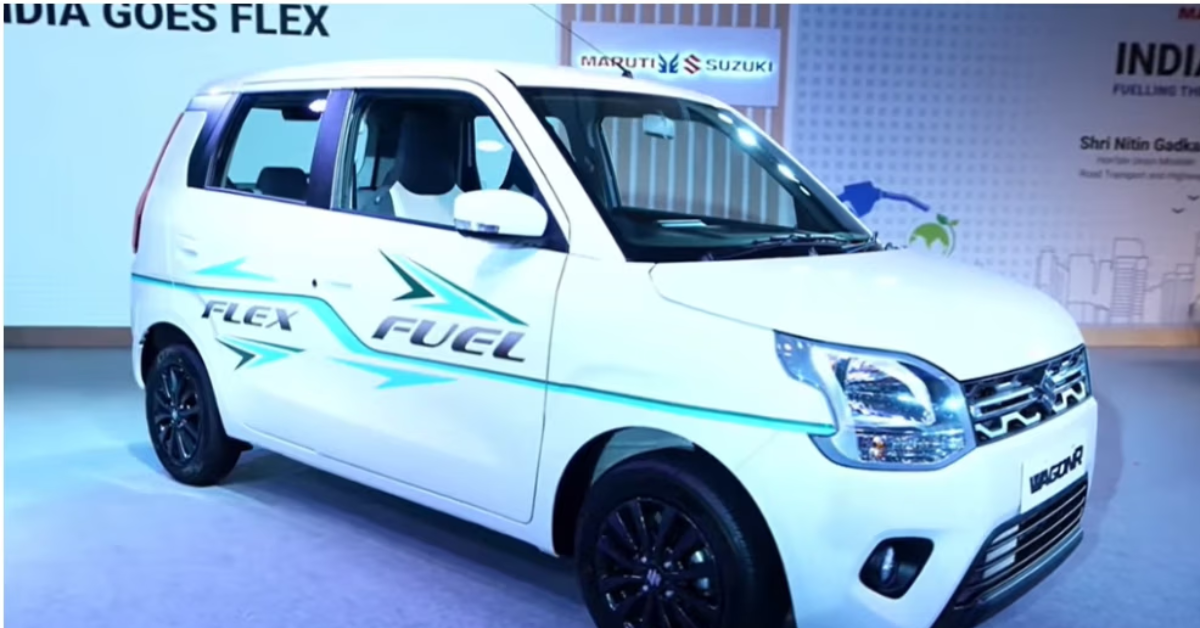
The Indian automotive industry is rapidly evolving as manufacturers explore cleaner and more sustainable alternatives to traditional fossil fuels. Electric vehicles have gained significant attention in recent years, but another promising technology is steadily moving into the spotlight—flex fuel vehicles.
Maruti Suzuki has taken a major step in this direction by showcasing the Wagon R Flex Fuel in Delhi. What makes this vehicle special is its ability to run on pure ethanol as well as various ethanol-petrol blends. This development highlights the growing focus on alternative fuels and India’s ambition to reduce dependence on imported crude oil.
The Wagon R has long been one of India’s most successful hatchbacks, known for its practicality, fuel efficiency, affordability, and reliability. By introducing flex fuel technology into such a popular model, Maruti Suzuki is demonstrating how sustainable mobility can be made accessible to the masses.
Let’s take a closer look at the Wagon R Flex Fuel, how the technology works, and why it could play an important role in the future of transportation.
What Is a Flex Fuel Vehicle?
Before understanding the Wagon R Flex Fuel, it is important to know what flex fuel technology actually means.
A flex fuel vehicle is designed to operate on multiple fuel types, including:
- Pure petrol
- Ethanol-petrol blends
- High ethanol concentrations
- Pure ethanol in certain configurations
Unlike conventional petrol vehicles, flex fuel cars can automatically adjust engine parameters depending on the fuel mixture present in the tank.
This flexibility allows drivers to use different fuel options without requiring any manual adjustments.
Why Ethanol Is Becoming Important
Ethanol is a renewable fuel primarily produced from agricultural crops such as sugarcane, corn, and other biomass sources.
Governments and automobile manufacturers are increasingly supporting ethanol because it offers several advantages.
Reduced Dependence on Crude Oil
Countries that import large quantities of crude oil can reduce fuel imports through ethanol adoption.
Lower Carbon Emissions
Ethanol generally produces fewer greenhouse gas emissions compared to conventional fossil fuels.
Support for Agriculture
Increased ethanol production can create additional opportunities for farmers and agricultural industries.
Improved Energy Security
Locally produced ethanol helps strengthen domestic energy resources.
These benefits make ethanol an attractive solution for future transportation needs.
Why Wagon R Was Chosen for Flex Fuel Technology
The Wagon R has always been one of Maruti Suzuki’s most practical and widely accepted products.
Several factors make it an ideal candidate for flex fuel technology.
Massive Customer Base
The Wagon R enjoys strong popularity among:
- Families
- Fleet operators
- Daily commuters
- Small business owners
Introducing flex fuel technology in such a popular model can accelerate adoption.
Proven Reliability
The vehicle’s long-standing reputation for durability makes it a suitable platform for testing future fuel technologies.
Affordable Ownership
Flex fuel technology aligns well with the Wagon R’s value-oriented positioning.
Exterior Design Remains Familiar
One of the interesting aspects of the showcased Wagon R Flex Fuel is that it largely retains the familiar Wagon R design.
The vehicle continues to feature:
- Tall-boy architecture
- Large glass area
- Compact dimensions
- Practical hatchback styling
- Spacious proportions
This approach demonstrates that alternative fuel technology does not necessarily require radical design changes.
The vehicle remains instantly recognizable as a Wagon R.
Flex Fuel Technology: What Changes Under the Hood?
While the exterior appears familiar, the major changes are found inside the engine and fuel system.
To operate efficiently on ethanol, manufacturers must make several modifications.
Special Engine Calibration
The engine management system is designed to:
- Detect fuel composition
- Adjust ignition timing
- Optimize fuel injection
- Maintain performance consistency
These adjustments happen automatically.
Ethanol-Compatible Components
Ethanol has different chemical properties than petrol.
As a result, several components must be engineered specifically to handle ethanol exposure.
These may include:
- Fuel lines
- Fuel injectors
- Fuel pumps
- Seals and gaskets
- Fuel tank materials
This ensures durability and long-term reliability.
Advanced Sensors
Flex fuel vehicles use sophisticated sensors to determine the ethanol concentration present in the fuel.
The engine control unit then makes real-time adjustments to optimize performance.
This allows seamless operation regardless of fuel composition.
Performance Expectations
Many people assume that alternative fuels reduce vehicle performance.
However, modern flex fuel technology has advanced significantly.
Smooth Driving Experience
The Wagon R Flex Fuel is expected to offer:
- Predictable acceleration
- Smooth throttle response
- Refined operation
- Comfortable city driving
These characteristics remain important for everyday users.
High Octane Benefits
Ethanol possesses a naturally high octane rating.
This can provide benefits such as:
- Improved combustion efficiency
- Better engine optimization
- Reduced knocking tendency
- Enhanced thermal performance
With proper tuning, performance can remain competitive.
Fuel Economy Considerations
Fuel efficiency is always a major concern among Indian car buyers.
When discussing ethanol-powered vehicles, understanding fuel economy becomes important.
Energy Density Differences
Ethanol contains less energy per litre compared to petrol.
As a result:
- Fuel consumption may increase
- Mileage figures may differ from petrol versions
However, the overall operating economics depend on fuel pricing and availability.
Cost Efficiency
If ethanol remains competitively priced, users may still enjoy meaningful savings despite differences in fuel consumption.
Environmental Benefits of Ethanol
One of the biggest reasons governments support ethanol adoption is its environmental impact.
Lower Carbon Footprint
Ethanol can help reduce:
- Carbon dioxide emissions
- Fossil fuel dependence
- Greenhouse gas output
This contributes to cleaner transportation.
Renewable Fuel Source
Unlike petroleum-based fuels, ethanol is derived from renewable agricultural resources.
This makes it a more sustainable long-term solution.
Improved Air Quality
Wider adoption of cleaner fuels can contribute to:
- Reduced pollution levels
- Better urban air quality
- Improved environmental sustainability
These benefits are becoming increasingly important in growing cities.
How Flex Fuel Fits Into India’s Future Mobility Plans
The automotive industry is currently transitioning through multiple technologies.
These include:
- Electric vehicles
- Hybrid systems
- CNG vehicles
- Hydrogen technologies
- Ethanol-powered vehicles
Rather than relying on a single solution, manufacturers are exploring multiple pathways.
Flex fuel technology represents one of the most practical transitional solutions because it utilizes existing internal combustion engine platforms while reducing environmental impact.
Advantages for Consumers
The Wagon R Flex Fuel could offer several benefits to buyers.
Fuel Flexibility
Drivers can use different fuel blends based on availability.
This reduces dependence on a single fuel source.
Familiar Ownership Experience
Unlike electric vehicles, flex fuel cars maintain:
- Conventional refueling process
- Familiar driving behavior
- Existing vehicle architecture
This minimizes the learning curve for customers.
Potential Long-Term Savings
Depending on ethanol pricing and availability, running costs could become more attractive over time.
Challenges That Need to Be Addressed
While flex fuel technology offers many advantages, some challenges remain.
Ethanol Infrastructure
Widespread adoption requires:
- Consistent fuel availability
- Expanded distribution networks
- Reliable supply chains
Infrastructure development will play a critical role.
Consumer Awareness
Many buyers are still unfamiliar with flex fuel technology.
Education and awareness will be important for successful adoption.
Fuel Availability Across Regions
Access to high-ethanol fuels must improve nationwide to maximize benefits.
What This Means for Maruti Suzuki
For Maruti Suzuki, the Wagon R Flex Fuel represents more than just a technology demonstration.
It showcases the company’s commitment to:
- Sustainable mobility
- Alternative fuels
- Reduced emissions
- Future-ready transportation solutions
By leveraging one of its most trusted and affordable vehicles, Maruti can potentially bring advanced fuel technology to a wider audience than many competitors.
Could Flex Fuel Cars Become Mainstream?
The answer depends on several factors.
If ethanol infrastructure continues to improve and fuel availability expands, flex fuel vehicles could become increasingly attractive.
Their advantages include:
- Lower emissions
- Familiar ownership experience
- Reduced fuel dependence
- Affordable implementation
These factors position flex fuel technology as a realistic solution during the transition toward cleaner transportation.
Final Verdict
The Maruti Wagon R Flex Fuel showcased in Delhi highlights an important shift in the automotive industry’s approach to sustainable mobility. Instead of relying solely on electrification, manufacturers are exploring practical alternatives that can be adopted quickly and affordably.
By combining the proven reliability and practicality of the Wagon R with advanced flex fuel technology, Maruti Suzuki has demonstrated how future mobility solutions can remain accessible to everyday consumers. The ability to run on pure ethanol and various fuel blends offers flexibility, environmental benefits, and potential long-term cost advantages.
While infrastructure and fuel availability remain key challenges, the Wagon R Flex Fuel represents a significant step toward a cleaner and more diversified transportation future. For millions of buyers seeking affordable mobility, it could signal the beginning of a new era where sustainable fuels become a part of everyday driving.