
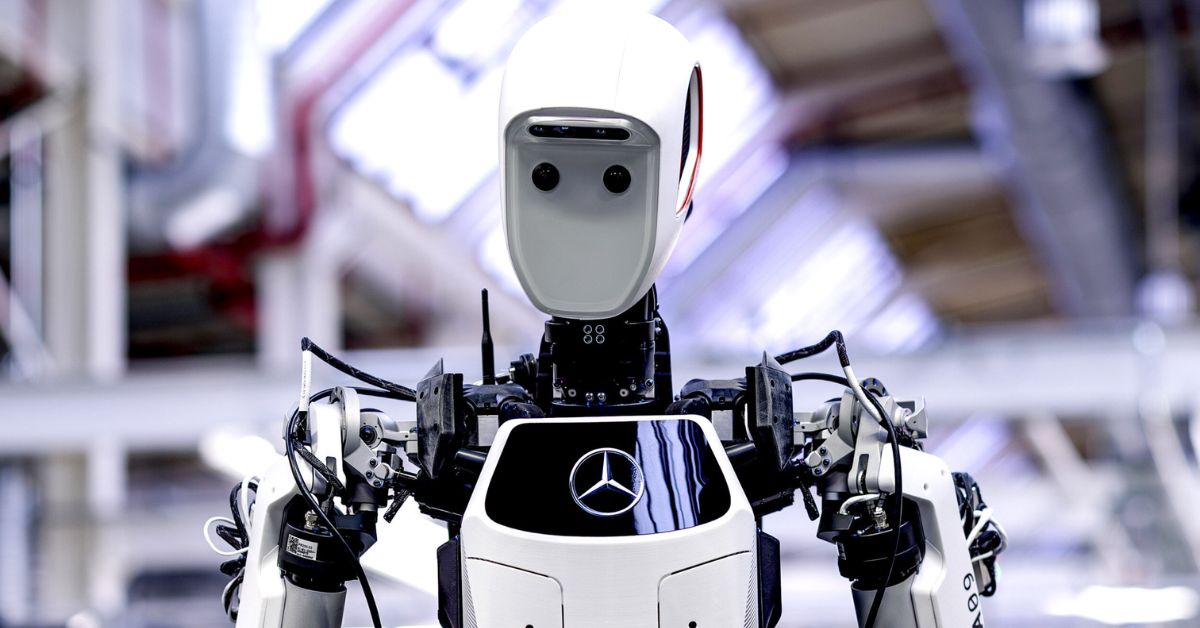
By 2030, the automotive industry could witness the rise of fully automated car plants, with Chinese brands leading the charge. These “dark factories,” operated almost entirely by robots, promise unprecedented efficiency, precision, and scalability—but they also raise questions about jobs, ethics, and the future of manufacturing.
⚙️ The Rise of AI-Powered Car Factories
China has already begun experimenting with highly automated production facilities. Leading EV makers are transforming traditional plants into software-defined, sensor-rich “AI car factories” that integrate robotics, computer vision, digital twins, and real-time optimization.
- Automation + AI at Scale: Robots, automated guided vehicles (AGVs), and in-line AI inspection reduce human intervention.
- Digital Twins: Virtual replicas of production lines allow predictive maintenance and optimization.
- Real-Time Analytics: AI monitors quality and throughput, ensuring fewer defects and faster cycles.
These advancements are not theoretical—they are already delivering measurable gains in cost reduction and production speed.
🏭 Case Study: Xiaomi’s Mega EV Factory
One of the most striking examples is Xiaomi’s EV factory in Tongzhou, Beijing, completed in 2023.
- Automation Rate: 91% overall automation.
- Robotics: Over 700 robots handle body assembly with minimal human oversight.
- Capacity: 240,000 cars per year.
- Efficiency: AGVs transport parts across the floor, while robotic arms perform intricate tasks.
This facility demonstrates how close the industry already is to full automation. By 2030, experts predict that Chinese automakers could achieve 100% robot-run plants, eliminating human labor from core processes.
🚀 Why Chinese Brands Are Leading
Several factors explain why Chinese automakers are at the forefront of this transformation:
- Government Support: China’s industrial policy strongly favors automation and AI integration.
- EV Boom: Rapid growth in electric vehicles creates demand for scalable, efficient production.
- Tech Ecosystem: Proximity to AI, robotics, and semiconductor industries accelerates innovation.
- Cost Pressures: Automation reduces reliance on human labor, addressing rising wages and labor shortages.
Together, these drivers make China the most likely candidate to pioneer fully automated car plants by 2030.
🌍 Global Implications
The arrival of fully automated plants will reshape the global automotive landscape:
- Efficiency Gains: Faster production cycles, lower costs, and higher consistency.
- Job Displacement: Human workers may be replaced, sparking debates about employment and retraining.
- Competitive Pressure: Western automakers will need to adopt similar technologies to remain competitive.
- Supply Chain Transformation: Automation could reduce reliance on global labor markets, localizing production.
Hyundai, for instance, has already announced plans to employ robots at its Georgia plant by 2028, showing that the trend is spreading beyond China.
⚖️ Challenges and Risks
While the vision of fully automated plants is compelling, several challenges remain:
- High Capital Costs: Building “dark factories” requires massive upfront investment.
- Cybersecurity Risks: AI-driven plants are vulnerable to hacking and system failures.
- Ethical Concerns: Job losses could spark social unrest if not managed with retraining programs.
- Flexibility Issues: Robots excel at repetitive tasks but may struggle with customization or unexpected changes.
Balancing efficiency with resilience will be critical for automakers.
🔮 The Road to 2030
Industry analysts from Gartner and Warburg Research predict that a Chinese automaker will likely be the first to eradicate humans from the workforce in car plants, possibly as soon as 2030.
- Short-Term (2025–2027): Expansion of semi-automated plants with 80–90% automation.
- Mid-Term (2028–2029): Integration of AI-driven decision-making and predictive analytics.
- Long-Term (2030): Emergence of fully automated “dark factories” producing cars without human labor.
🏁 Conclusion
The prospect of fully automated car plants by 2030 represents a seismic shift in manufacturing. Chinese brands, backed by government support and technological ecosystems, are poised to lead this revolution. While the benefits—efficiency, scalability, and precision—are undeniable, the challenges of job displacement, ethics, and resilience must be addressed.
As robots prepare to take over the assembly lines, the automotive industry faces a defining question: Will automation drive us toward a smarter, more sustainable future—or will it leave workers behind in the race for efficiency?