
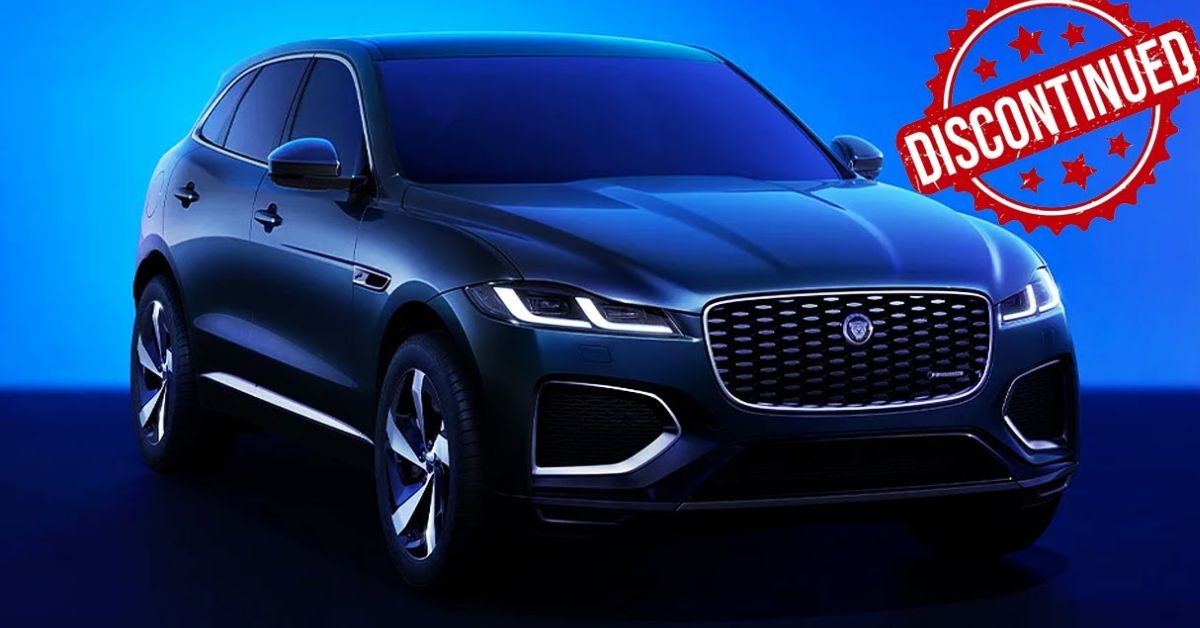
The automotive world has witnessed a historic moment: Jaguar has officially ended production of the F-Pace, its first-ever SUV, after a decade-long run. The final unit rolled off the assembly line at the Solihull plant in the UK in December 2025, closing the chapter on one of Jaguar’s most successful modern vehicles. More than just the end of a model, this milestone represents Jaguar’s transition to an all-electric lineup, as the F-Pace was the brand’s last internal combustion engine (ICE) vehicle.
The Rise of the F-Pace
Unveiled at the 2015 Detroit Auto Show, the F-Pace was Jaguar’s bold entry into the luxury SUV segment. Launched globally in 2016 and introduced in India later that year, the F-Pace quickly became a bestseller. Competing against the BMW X3, Audi Q5, and Mercedes-Benz GLC, it offered a unique blend of British design, sporty performance, and everyday practicality.
- Design appeal: Sleek, contemporary styling with Jaguar’s signature flair.
- Engine options: Initially launched with diesel engines, later expanded to include petrol variants.
- Performance: Equipped with AWD and an 8-speed automatic gearbox, balancing luxury with capability.
- Market success: Became Jaguar’s most popular model, accounting for a significant share of sales.
The Final Curtain
The last F-Pace to leave Solihull was a black-painted SVR, powered by a V8 engine. This symbolic vehicle has been handed over to the Jaguar Daimler Heritage Trust, where it will join other iconic models, including the first SS Jaguar Saloon and the last XE Saloon.
This final unit is not available for purchase, serving instead as a museum piece to commemorate Jaguar’s ICE legacy.
Why End Production?
Jaguar’s decision to phase out the F-Pace is part of its Reimagine strategy, which commits the brand to becoming an EV-only manufacturer by 2026. The Solihull plant is already being retooled to produce the upcoming Range Rover Electric, while Jaguar prepares to launch its next-generation EVs, previewed by the Type 00 Concept.
Key reasons for ending production:
- Shift to electrification: Aligning with global sustainability goals.
- Market trends: Growing demand for EVs over ICE vehicles.
- Brand repositioning: Jaguar aims to reinvent itself as a pure luxury EV brand.
Legacy of the F-Pace
The F-Pace leaves behind a strong legacy:
- Jaguar’s first SUV: A bold move that expanded the brand’s appeal.
- Award-winning design: Praised for its balance of sportiness and elegance.
- Global success: Helped Jaguar compete in one of the fastest-growing automotive segments.
- Final ICE Jaguar: Symbolizes the end of an era and the beginning of a new one.
Comparison: F-Pace vs Jaguar’s Future EVs
| Feature | Jaguar F-Pace (2015–2025) | Jaguar Future EVs (2026 onwards) |
|---|---|---|
| Powertrain | Petrol & diesel engines | Fully electric |
| Platform | ICE-based SUV | EV-dedicated architecture |
| Design | Contemporary SUV styling | Futuristic, concept-inspired |
| Market role | Entry into SUV segment | Reinvention as luxury EV brand |
| Legacy | Last ICE Jaguar | First generation of Jaguar EVs |
Final Thoughts
The end of the Jaguar F-Pace is bittersweet. On one hand, it closes the chapter on a model that brought Jaguar into the SUV era and became its best-selling vehicle. On the other, it marks the exciting beginning of Jaguar’s electric-only future, where innovation and sustainability will define the brand.
For enthusiasts, the F-Pace will always be remembered as the SUV that proved Jaguar could thrive outside its traditional sports car and sedan lineup. As the last ICE-powered Jaguar, it stands as a symbol of transition—an icon that bridged the past and the future.