
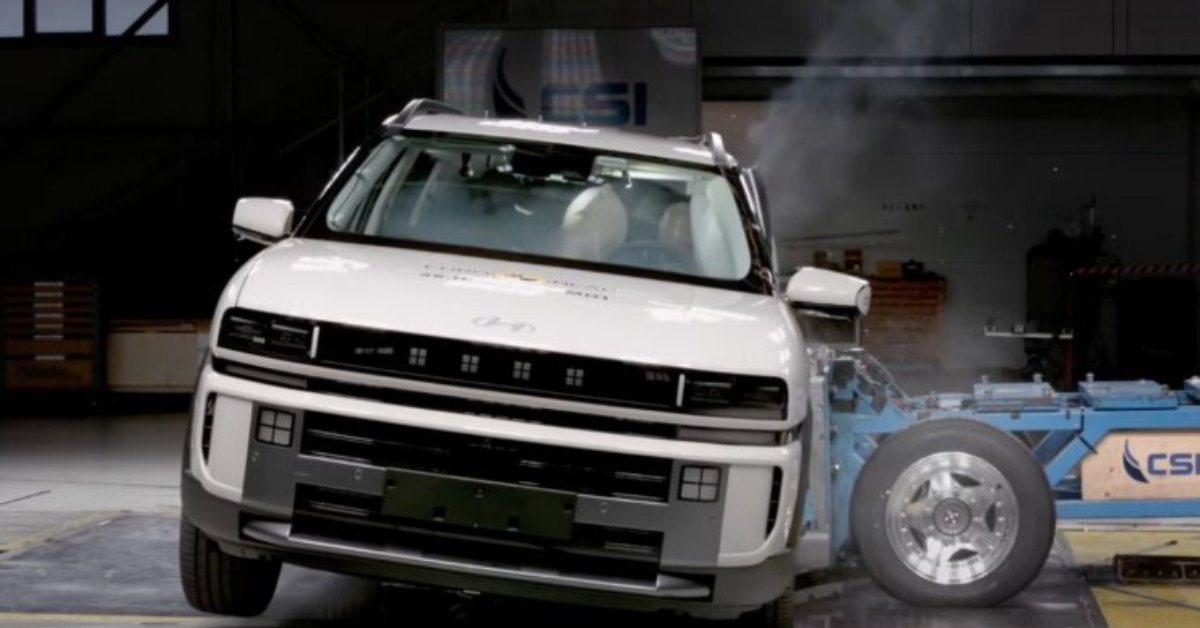
The global automotive industry is moving steadily toward cleaner and safer mobility, and Hyundai continues to position itself at the forefront of this transition. The Hyundai Nexo Fuel Cell Electric Vehicle (FCEV) has recently achieved a full five-star safety rating in Euro NCAP crash tests, reinforcing its credentials as one of the safest hydrogen-powered SUVs in the world.
This achievement has sparked interest not only in Europe but also in emerging markets like India. With Hyundai already exploring alternative fuel technologies in the country, many enthusiasts and industry watchers are now asking a crucial question: Is the Hyundai Nexo India-bound? In this blog, we take a closer look at the Nexo’s safety performance, technology, and the feasibility of its entry into the Indian market.
What Is the Hyundai Nexo FCEV?
The Hyundai Nexo is a hydrogen fuel cell electric SUV that uses hydrogen to generate electricity, producing only water vapor as its emission. Unlike battery electric vehicles, the Nexo does not rely on large battery packs for long-range driving, instead using a fuel cell stack to generate power on demand.
Designed as a futuristic and eco-friendly SUV, the Nexo represents Hyundai’s long-term vision for zero-emission mobility, especially in markets where hydrogen infrastructure is developing.
Five-Star Euro NCAP Rating Explained
Earning a five-star Euro NCAP rating is a significant milestone, especially for a vehicle powered by alternative fuel technology. The Hyundai Nexo performed strongly across all major safety categories.
Adult Occupant Protection
The Nexo demonstrated excellent crash protection for adult passengers, maintaining cabin integrity and minimizing impact forces during frontal and side collisions.
Child Occupant Safety
Advanced child restraint compatibility and strong structural protection helped the Nexo score high in child safety tests.
Pedestrian Protection
The SUV’s front-end design and active safety systems reduced the risk of serious injury to pedestrians and cyclists.
Safety Assist Technologies
Features like autonomous emergency braking, lane-keeping assist, adaptive cruise control, and blind-spot monitoring played a crucial role in securing the five-star rating.
This performance proves that hydrogen-powered vehicles can be just as safe—if not safer—than conventional petrol or electric cars.
Safety Features That Make the Nexo Stand Out
The Hyundai Nexo comes equipped with a wide range of advanced safety and driver assistance features, including:
- Multiple airbags
- Autonomous emergency braking
- Lane departure warning and lane keep assist
- Blind spot detection
- Rear cross-traffic alert
- Adaptive cruise control
- Driver attention warning
These features not only help prevent accidents but also provide confidence to drivers, especially on highways and long journeys.
Design and Interior Appeal
Beyond safety, the Hyundai Nexo offers a clean, modern design that reflects its futuristic powertrain. The exterior features smooth surfaces, aerodynamic lines, and a minimalist SUV profile aimed at maximizing efficiency.
Inside, the cabin feels premium and tech-focused, with:
- Large digital displays
- Touch-based controls
- High-quality materials
- Spacious seating layout
The interior design emphasizes comfort, sustainability, and modern aesthetics, making the Nexo suitable for both urban commuting and long-distance travel.
Performance and Driving Experience
The Hyundai Nexo delivers smooth and quiet performance, typical of electric vehicles. Power is delivered instantly, resulting in seamless acceleration and a refined driving experience.
Key performance highlights include:
- Zero tailpipe emissions
- Quick refueling compared to EV charging
- Long driving range on a full hydrogen tank
- Quiet and vibration-free operation
These attributes make the Nexo especially appealing for buyers who want eco-friendly mobility without compromising convenience.
Is the Hyundai Nexo Suitable for India?
The idea of the Hyundai Nexo coming to India is exciting, but it comes with both opportunities and challenges.
Why It Makes Sense
- India is actively exploring green hydrogen as a future energy source
- Hyundai already has a strong presence and manufacturing base in India
- Government focus on clean energy could support hydrogen vehicles
- Growing awareness of zero-emission mobility
Challenges to Overcome
- Limited hydrogen refueling infrastructure
- High production and technology costs
- Need for regulatory and safety standards specific to hydrogen vehicles
At present, these challenges make a mass-market launch unlikely, but a pilot or limited introduction cannot be ruled out in the long term.
Hyundai’s Hydrogen Vision
Hyundai has been one of the most vocal global manufacturers when it comes to hydrogen technology. The company sees hydrogen as a complementary solution alongside electric vehicles, especially for markets where fast refueling and long range are critical.
The Nexo is a key part of this strategy, serving as a proof-of-concept that hydrogen vehicles can be safe, practical, and consumer-friendly.
What an India Launch Could Look Like
If Hyundai decides to introduce the Nexo in India, it is likely to:
- Be launched in limited numbers
- Target government fleets or pilot projects
- Focus on metro cities with future hydrogen infrastructure
- Serve as a technology showcase rather than a volume seller
Such a move would align with Hyundai’s long-term innovation goals rather than short-term sales targets.
How This Impacts Indian Buyers
For Indian consumers, the Nexo’s five-star safety rating sends a positive message about the future of alternative fuel vehicles. It shows that new-age technologies can deliver top-tier safety without compromise.
While the Nexo may not arrive in Indian showrooms immediately, its success helps pave the way for safer, cleaner vehicles in the years ahead.
Future Outlook
The Hyundai Nexo’s achievement highlights a broader shift in the automotive industry—where sustainability, safety, and technology go hand in hand. As hydrogen infrastructure evolves globally and in India, vehicles like the Nexo could play a bigger role in shaping future mobility.
India’s focus on renewable energy and hydrogen production could eventually create the right environment for such advanced vehicles to enter the market.
Conclusion
The Hyundai Nexo FCEV’s five-star Euro NCAP rating is a major validation of hydrogen vehicle safety and Hyundai’s engineering excellence. It proves that alternative fuel vehicles can meet the highest global safety standards while offering zero-emission mobility.
While an India launch is not imminent, the growing interest in hydrogen energy and Hyundai’s strong commitment to innovation make the possibility worth watching. For now, the Nexo stands as a glimpse into the future—one where safety, sustainability, and smart technology come together seamlessly.